Pet Trauma Emergency in Rostov-on-Don
Falls, road accidents, bite wounds, blunt impact and penetrating injuries can cause internal damage even when a pet initially looks relatively stable. Significant trauma requires assessment of breathing, circulation and hidden bleeding.
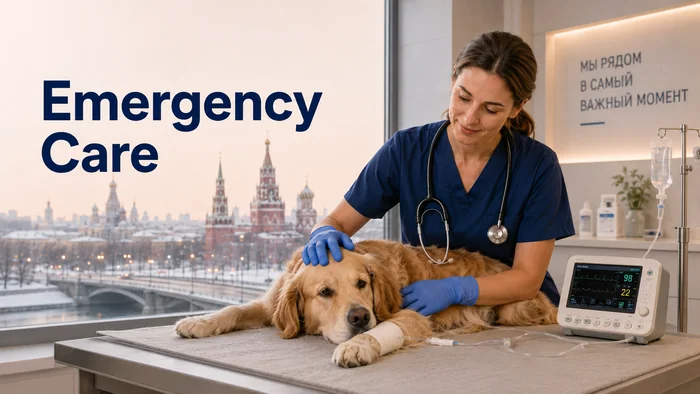
Local context: In Rostov-on-Don, central traffic, bridges and major residential corridors can affect travel. If a procedure may leave a pet sleepy, arrange transport, a secure carrier and a quiet recovery area at home in advance.
Signs that make the situation urgent
Not every episode means a catastrophe, but the cost of waiting can be high in a true emergency. Judge the whole pet, speed of deterioration and combination of signs rather than relying on one symptom in isolation.
- breathing difficulty
- heavy or persistent bleeding
- inability to stand or use a limb
- pale gums or cold extremities
- loss of consciousness, disorientation or seizures
- an open wound, deformity or severe pain
Combinations of signs are especially concerning, such as vomiting with weakness, pain with pale gums, or abnormal breathing with an inability to settle. Cats may show severe illness as quiet withdrawal rather than dramatic behaviour, which does not make the situation safer.
What to do right now
Do not attempt to set fractures or dislocations yourself. Do not remove deeply embedded objects from wounds. Do not give human painkillers. If spinal injury is possible, minimise movement and transport the pet as steadily as possible.
Collect the information most useful to a clinician: when the signs began, current medicines, chronic conditions, recent surgery, possible toxins and objects the pet may have swallowed. Bring packaging, photos or video when relevant, but do not delay departure trying to build a perfect history.
If the pet is stable enough that a brief call will not delay care, tell the clinic the species, age, approximate weight and main sign in one sentence. Then ask whether emergency patients are being accepted now and whether the diagnostics or surgery that may be required are actually available.
What may happen at the clinic
The clinic will prioritise breathing and circulation. X-rays, FAST ultrasound, blood tests, oxygen, pain relief, wound care, transfusion or surgery may then be required. In major trauma, diagnostics often happen in parallel with stabilisation.
Emergency medicine does not always follow the order of a routine appointment. Staff first assess breathing, circulation, consciousness and pain, stabilise the most dangerous problems and then expand diagnostics. That is triage, not a lack of diagnostic thinking.
What can make up the bill
| Category | What it may include |
|---|---|
| Emergency examination | Triage, physical examination and initial stabilisation |
| Diagnostics | Blood tests, X-rays, ultrasound, ECG, urinalysis or specialised testing |
| Medication and supplies | IV fluids, pain relief, anti-nausea medication, antibiotics, catheters and consumables |
| Anaesthesia/procedure | Sedation, endoscopy, catheterisation or another intervention |
| Surgery | Surgical team, anaesthesia, monitoring, consumables and postoperative care |
| Hospitalisation | Monitoring, repeat testing, fluids and intensive nursing care |
We do not invent a generic “average price” for Rostov-on-Don. Specific tariffs should be published only with a primary source, verification date and a clear description of what the quoted figure includes.
Organising urgent travel in Rostov-on-Don
In Rostov-on-Don, central traffic, bridges and major residential corridors can affect travel. If a procedure may leave a pet sleepy, arrange transport, a secure carrier and a quiet recovery area at home in advance.
In a critical situation, prioritise a clinic that confirms acceptance and has the required capability rather than the most attractive directory profile. If a network has several branches, confirm the exact location because staffing and equipment may differ.
Transport cats in a secure carrier. Use a harness or the most stable surface available for a dog after major trauma. A painful pet may bite even a familiar owner, so protect yourself while moving the animal.
Need a quick next-step assessment?
Pet911 can help structure urgency. If there are life-threatening signs, an online assessment should not delay in-person veterinary care.
Assess urgency with Pet911Frequently asked questions
Should I go to a clinic immediately?
If there is severe pain, repeated vomiting, collapse, breathing difficulty or rapid deterioration, do not delay in-person veterinary assessment.
Should I call first?
If calling will not delay care, state the main symptom, age and approximate weight and ask whether emergency patients are being accepted and whether relevant diagnostics are available.
What should I bring?
Bring the pet passport, medication list, previous results, toxin packaging or a photo of the swallowed object when relevant.
Should I feed my pet before travelling?
Unless a veterinarian says otherwise, avoid feeding if sedation, endoscopy or surgery may be needed. Do not force water when there is vomiting or impaired consciousness.
How should I transport my pet?
Use a secure carrier for cats. Use a harness or stable surface for dogs, particularly after major trauma. Minimise stress and unnecessary movement.
What tests might be needed?
Testing depends on the signs and may include blood work, X-rays, ultrasound, ECG, urinalysis or other diagnostics after the initial examination.
Can the problem improve on its own?
Some signs fluctuate, but temporary improvement does not exclude a dangerous cause. Potential emergencies deserve objective veterinary assessment.
Can I give a human painkiller?
Not unless a veterinarian specifically directs you to. Many human medicines are toxic to dogs or cats and can complicate diagnosis.
How should I choose a clinic in Rostov-on-Don?
Do not compare distance alone. Confirm current acceptance and whether diagnostics, surgery, anaesthesia and inpatient monitoring are available if they may be needed.
Why can’t the total cost be quoted in advance?
Emergency cost depends on severity, diagnostics, medication, procedures, anaesthesia, surgery and inpatient care. An exact total may be impossible before examination.
How does PetCare Russia handle clinic and price claims?
We avoid invented tariffs and unverified opening-hour claims. Specific provider data should have a primary source and a verification date.
Where does the urgency-assessment button go?
The CTA opens Pet911’s international assessment. It can help organise the next step but should never delay travel when life-threatening signs are present.
Related emergency pages in Rostov-on-Don
Pet Poisoning Emergency in Rostov-on-Don · Cat Cannot Urinate in Rostov-on-Don: Possible Urinary Blockage · Dog Bloat Emergency in Rostov-on-Don: When GDV Is a Concern · Pet Swallowed a Foreign Object in Rostov-on-Don · Possible Pyometra in Rostov-on-Don: Emergency Vet Care